

Logging into OKX: What Traders in the US Need to Know (Myth‑Busting Guide)
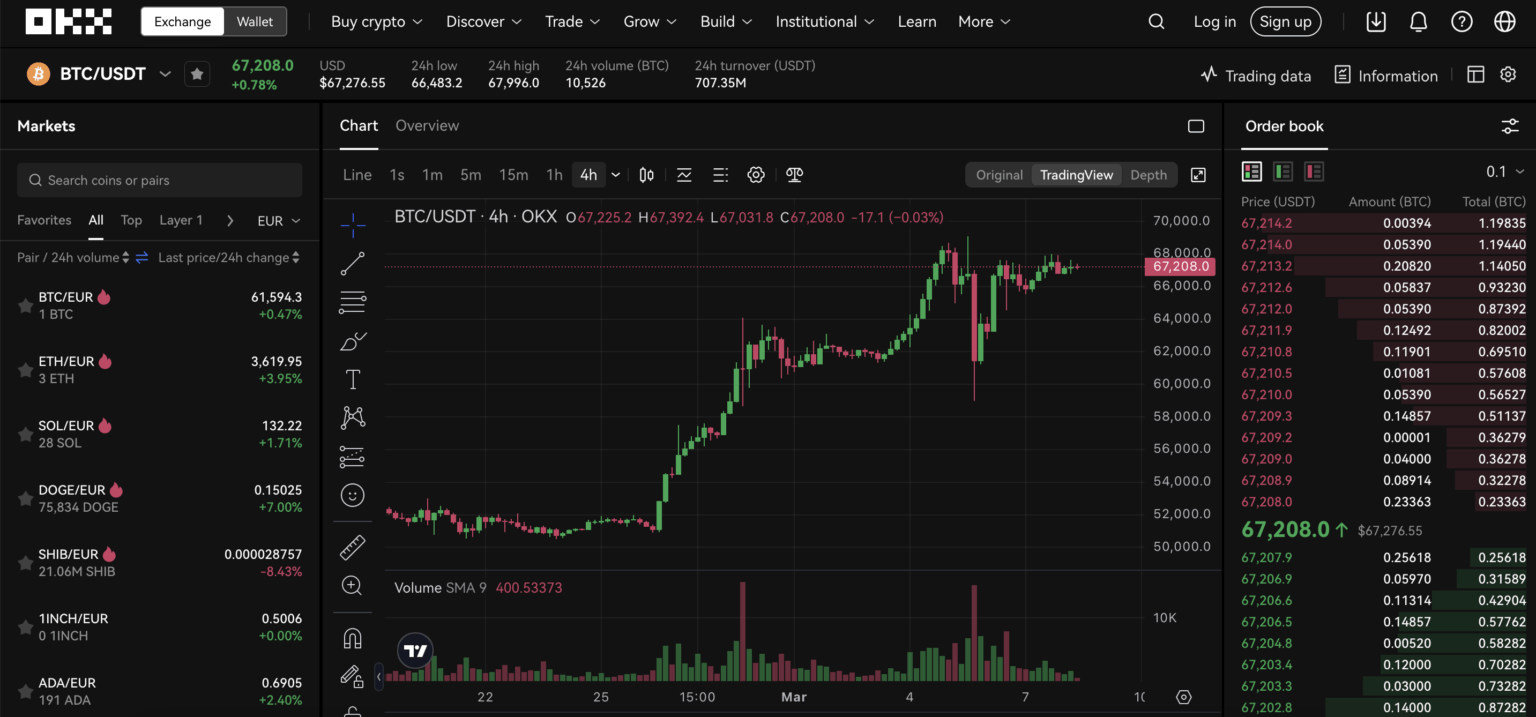
Imagine you’re on your phone with price alerts screeching: BTC has dropped 6% in ten minutes and you need to move funds, stake a coin, or close a leveraged position. You tap the OKX app and—nothing. Or worse: a web page looks right but something smells off. That moment crystallizes two realities for US crypto traders: the technical act of “logging in” is simple, but the surrounding mechanics, risks, and choices determine whether that log-in becomes an opportunity or a disaster.
This article breaks apart common myths about OKX login and account access, explains how the system actually works (mechanisms), highlights trade-offs and points of failure (limits), and gives practical rules you can use next time price action demands a fast, safe response.
Myth 1: “Logging in is just entering a password”—Why that’s misleading
On the surface, OKX sign in looks like any web application: username/email and password. But several layered mechanisms turn that simple form into a security boundary. First, OKX enforces mandatory Two‑Factor Authentication (2FA) and combines it with AI‑driven threat detection to flag unusual login attempts. Second, KYC (Know Your Customer) verification ties accounts to government IDs and a liveness face check. Third, the platform supports biometric login on mobile and hardware‑backed approvals for withdrawals when coupled with a Web3 wallet or integrated hardware device.
The practical consequence is that the “password only” mental model underestimates how access control actually works. If you forget your 2FA or lose device access, account recovery becomes a procedural interaction with the exchange that can take time—time you might not have during a market swing.
Mechanics: How OKX login and account protection fit together
Think of access control in three layers: authentication, session security, and custody model. Authentication is the who-you-are check (password + 2FA + biometrics). Session security covers how the site or app keeps you logged in safely (encrypted tokens, IP monitoring, real‑time risk scoring). Custody model defines whether the exchange holds private keys for assets (centralized) or you hold them (non‑custodial Web3 wallet).
OKX blends both custody models: a centralized exchange account where OKX stores most assets (over 95% in cold, multi‑sig wallets) and a non‑custodial Web3 wallet option that places seed phrase responsibility on you. That dual approach affects login behaviors. With a CEX account, phishing that captures credentials could let an attacker request withdrawals, but cold storage and multi‑sig controls reduce mass loss risk. With a self‑custodial wallet, there’s no username/password to steal—only the seed phrase. Lose that phrase and access is permanently gone.
For US traders, the KYC layer matters: identity verification is a gatekeeper for higher‑value features such as derivatives and staking. The KYC process uses government ID plus facial liveness checks, which improves traceability but also means that account recovery has regulatory constraints and identity linkage that some privacy‑minded users will find restrictive.
Common misconceptions, corrected
Misconception: “Biometric login is enough.” Correction: biometrics on mobile are convenient and secure against casual device theft, but they are only as strong as the device and OS security. They do not replace 2FA or protect against phishing where a user voluntarily hands over session tokens on a malicious page.
Misconception: “Cold storage makes me invulnerable.” Correction: storing 95% of assets cold reduces exchange hacking risk, but it doesn’t protect your account from social engineering that authorizes withdrawals, or smart contract exploits if you use integrated DeFi features. Cold storage is a risk‑mitigation, not an absolute safeguard.
Misconception: “The web app is always safest.” Correction: desktop browsers can be hardened, but they are also the primary channel for phishing and browser extension exploits. OKX’s browser extension aims to smooth Web3 workflows, but any extension increases the attack surface unless you strictly vet and limit installed extensions.
Decision framework: How to choose a login posture under time pressure
When price action is urgent, choose one of three practical postures based on your priorities: speed, security, or flexibility.
– Speed: Keep an active, authenticated mobile session with biometric unlock plus a hot wallet funded for quick trades. Trade‑off: higher exposure if the device is compromised. Use only for small, tactical positions.
– Security: Use hardware wallet integrations (Ledger/Trezor) tied to your OKX Web3 wallet for trading or withdrawals, and keep the exchange CEX balance minimized. Trade‑off: slower and less convenient in fast markets; some margin/derivative features may be less available.
– Flexibility: Maintain both a verified OKX CEX account (KYC completed) and a seeded Web3 wallet. Use CEX for spot and derivatives, Web3 wallet for staking and DeFi. Trade‑off: more cognitive overhead and more surfaces to secure.
Heuristic: never keep more on the exchange than you intend to trade within a short window; use the Web3 wallet (with a hardware signer) for larger, long‑term holdings and staking that benefits from auto‑compounding features.
Where login flows break and what to watch
There are predictable failure modes: lost 2FA, compromised email, phishing pages that mimic OKX’s web login, and facial verification failures that block KYC. Each failure has different recovery friction. For example, losing Google Authenticator requires account recovery that may take days and involve identity rechecks. Phishing may produce immediate unauthorized trades or withdrawal requests; AI threat detection reduces but does not eliminate this risk.
Signal to watch: if you get a login notification for a device you do not own, treat it as critical. Revoke sessions, change passwords, and contact support. For traders in the US, where KYC ties identity to accounts, the recovery process includes identity proofing steps that are deliberately strict—this reduces fraud but increases recovery time.
Practical checklist before you trade under pressure
1) Confirm 2FA is active and backed up (store OTP backups securely). 2) Keep a small hot balance for execution; move the rest to cold or to your non‑custodial Web3 wallet. 3) Use hardware wallet approvals for large withdrawals and for DeFi interactions. 4) Bookmark the official OKX URL and train yourself to verify TLS and domain; avoid links in unsolicited messages. 5) If you use the browser extension, restrict permissions and audit third‑party extensions regularly.
If you want a refresher on the correct web entry points and recovery options, the official guidance and login procedure are collected here.
Implications and what to watch next
OKX’s model of combining a CEX, a non‑custodial wallet, staking products, and a DEX aggregator means login behavior will remain central to platform design. Expect incremental tightening of AI detection, more biometric and hardware-based options, and stricter KYC friction where regulators press exchanges. A signal that should change your behavior: if OKX increases mandatory hardware approvals for withdrawals or adds more layered authentication, prioritize setting up those protections sooner rather than later.
Conversely, delistings—like the recent routine removal of several low‑volume spot pairs—do not directly affect login but illustrate platform housekeeping that affects liquidity and the assets you might trade when logged in. Liquidity adjustments can turn quick trades into slippage events, which makes fast, reliable access even more valuable.
FAQ
Q: What should I do if I lose access to my 2FA device?
A: Start account recovery immediately through OKX support. Have your KYC documents ready because recovery will require identity verification. As a preventive measure, store 2FA backup codes securely or use a secondary authenticator device kept offline.
Q: Is the OKX Web3 wallet safer than keeping funds on the exchange?
A: “Safer” depends on the risk you worry about. A non‑custodial wallet eliminates exchange counterparty risk and central control, but it transfers custody risk to you—lose the seed phrase and access is gone. Exchange cold storage reduces hacking risk at the platform level and offers recovery options, but it introduces counterparty and withdrawal‑authorization risk. Use both deliberately: exchange for trading, self‑custody for long‑term holdings and staking with hardware backups.
Q: How does KYC affect my login experience in the US?
A: KYC requires submitting ID and a liveness check, which can add time to account setup and recovery. It also ties your account to verified identity records, which changes dispute resolution and withdrawal authorization protocols—good for fraud reduction, but it can slow down emergency access restoration.
Q: If I use OKX mobile biometrics, do I still need 2FA?
A: Yes. Biometric unlocks the app on your device but does not replace exchange‑level 2FA for critical actions like withdrawals or session recovery. Treat biometrics as convenience + a local device protection layer, not as a substitute for multi‑factor authentication.